AI study platform
EduQuest AI
Students upload their notes and get quizzes, spaced-repetition flashcards and a tutor that answers from their own material, with XP, ranks and daily quests to keep them coming back.
- Industry
- Education
- Our role
- Design and full-stack development
- Timeline
- 1–3 months
- Platform
- Web
The goal
Turn a student's own notes into study material they'll actually come back to.
The challenge
Generic AI makes up questions. Every quiz had to come from the student's own files, survive messy PDFs, Word files and slides, and still feel instant and fun.
How we solved it
A RAG pipeline with Cohere embeddings so every quiz and answer is grounded in the student's uploads, hardened parsing before anything reaches the model, and a game layer of XP, ranks and quests on top.
What we built
Quizzes from your own files
PDF, DOCX, PPTX and TXT become quizzes whose difficulty adapts to past scores.
A tutor that sticks to the notes
Answers are retrieved from the student's own uploads, not the internet.
Flashcards on a real schedule
SM-2 spaced repetition brings each card back just before it would be forgotten.
Progress worth coming back for
XP for every quiz, five ranks from Bronze to Diamond, daily and weekly quests, streaks with freeze tokens, and leaderboards.
Easy to try, safe to ship
Guest mode with no sign-up, httpOnly JWT auth with ownership checks, and Playwright tests guarding the core flow.
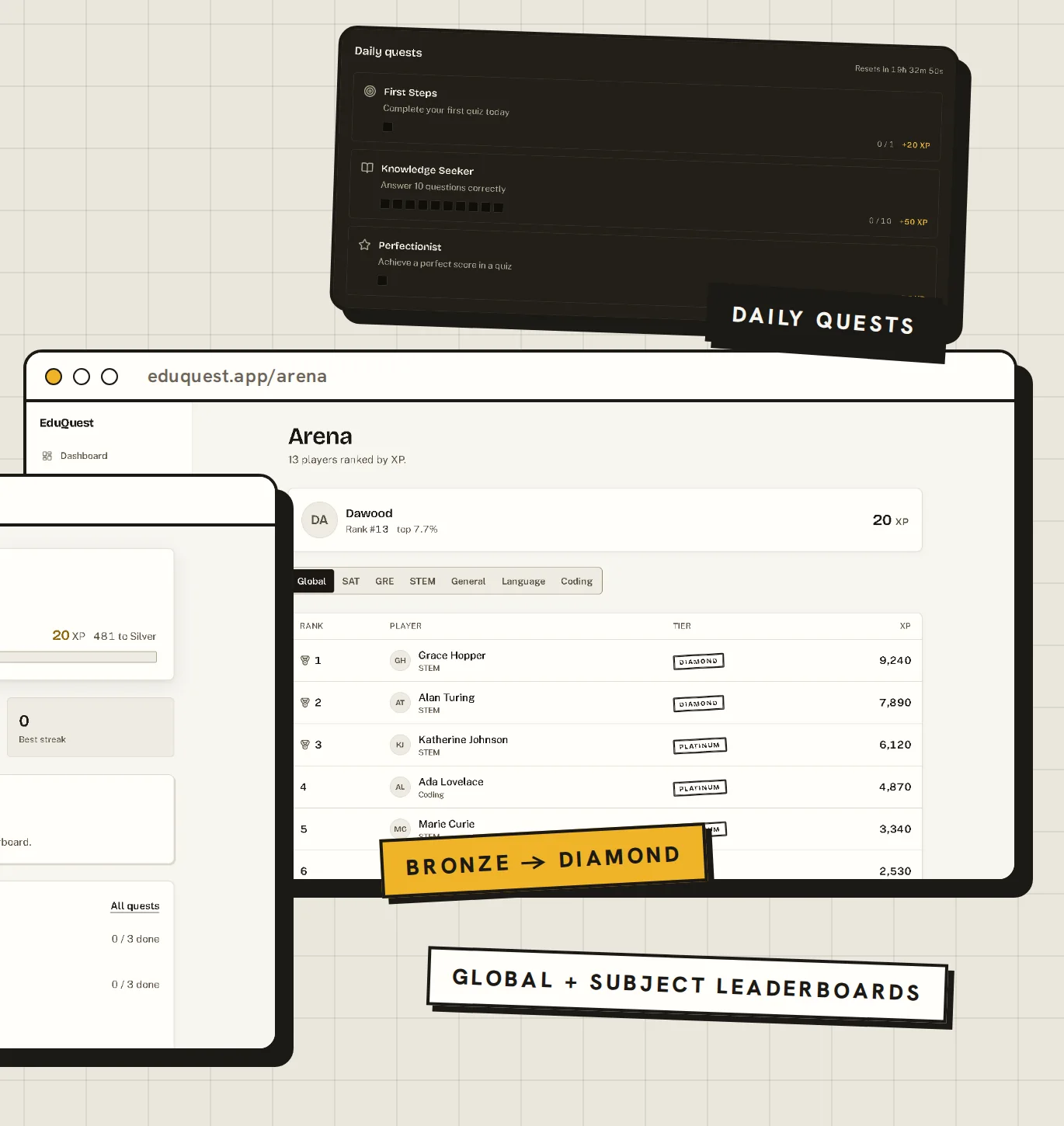
Progress worth coming back for.
XP for every quiz, five rank tiers, daily and weekly quests, and global and subject leaderboards.
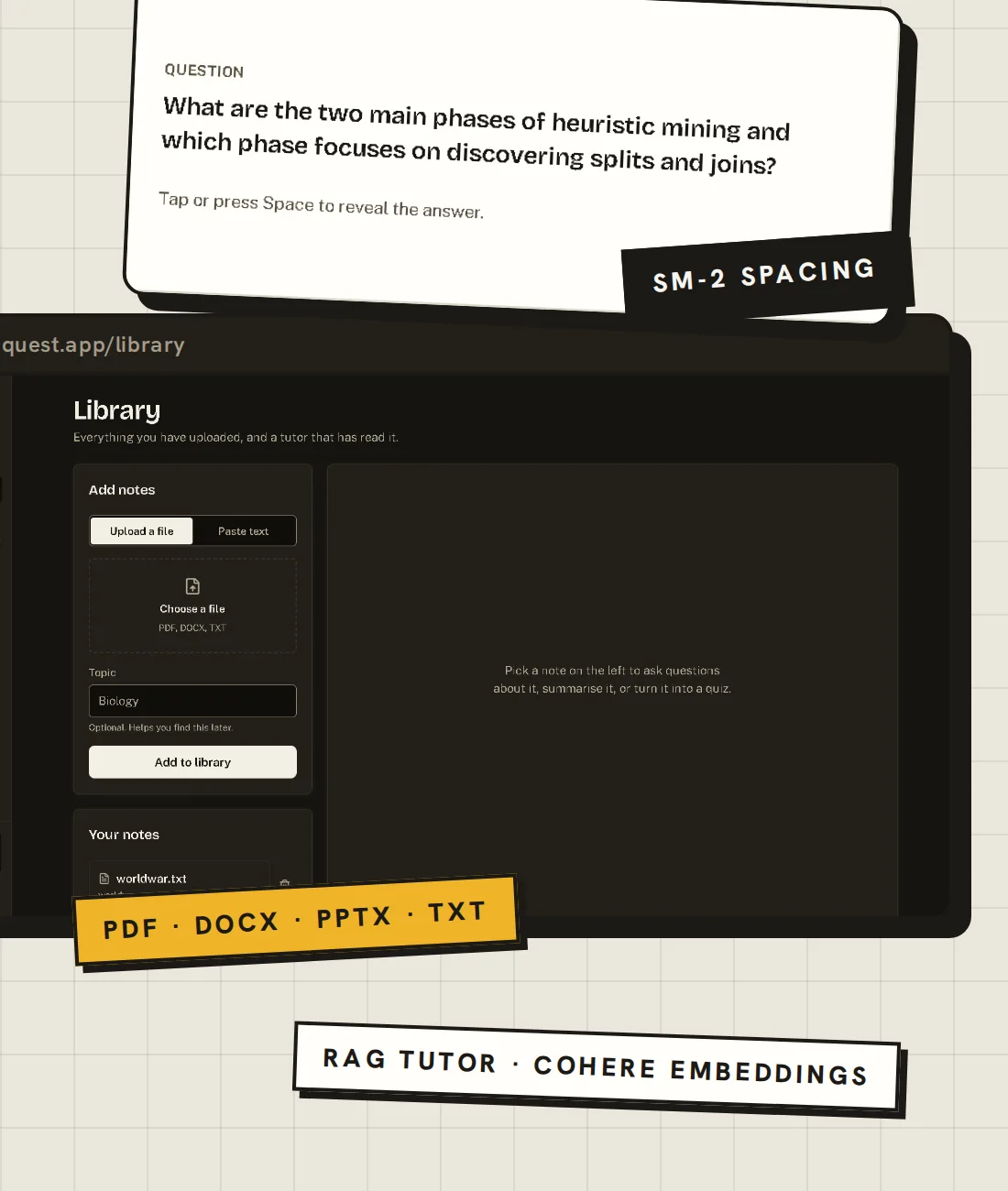
Answers from your notes, not the internet.
Upload a chapter and get quizzes that adapt to your scores, flashcards on a real spacing schedule, and a tutor that retrieves from your own material.
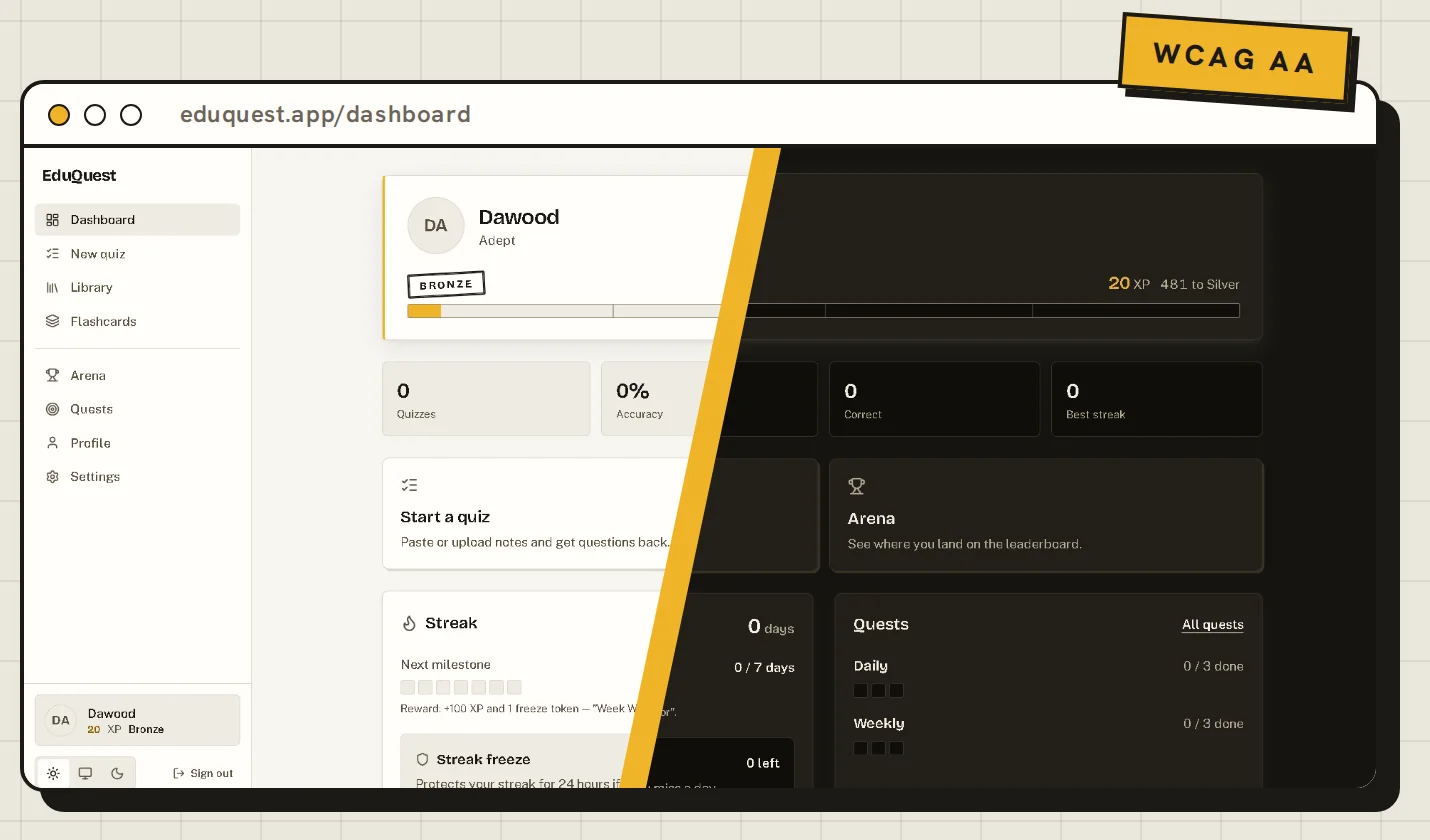
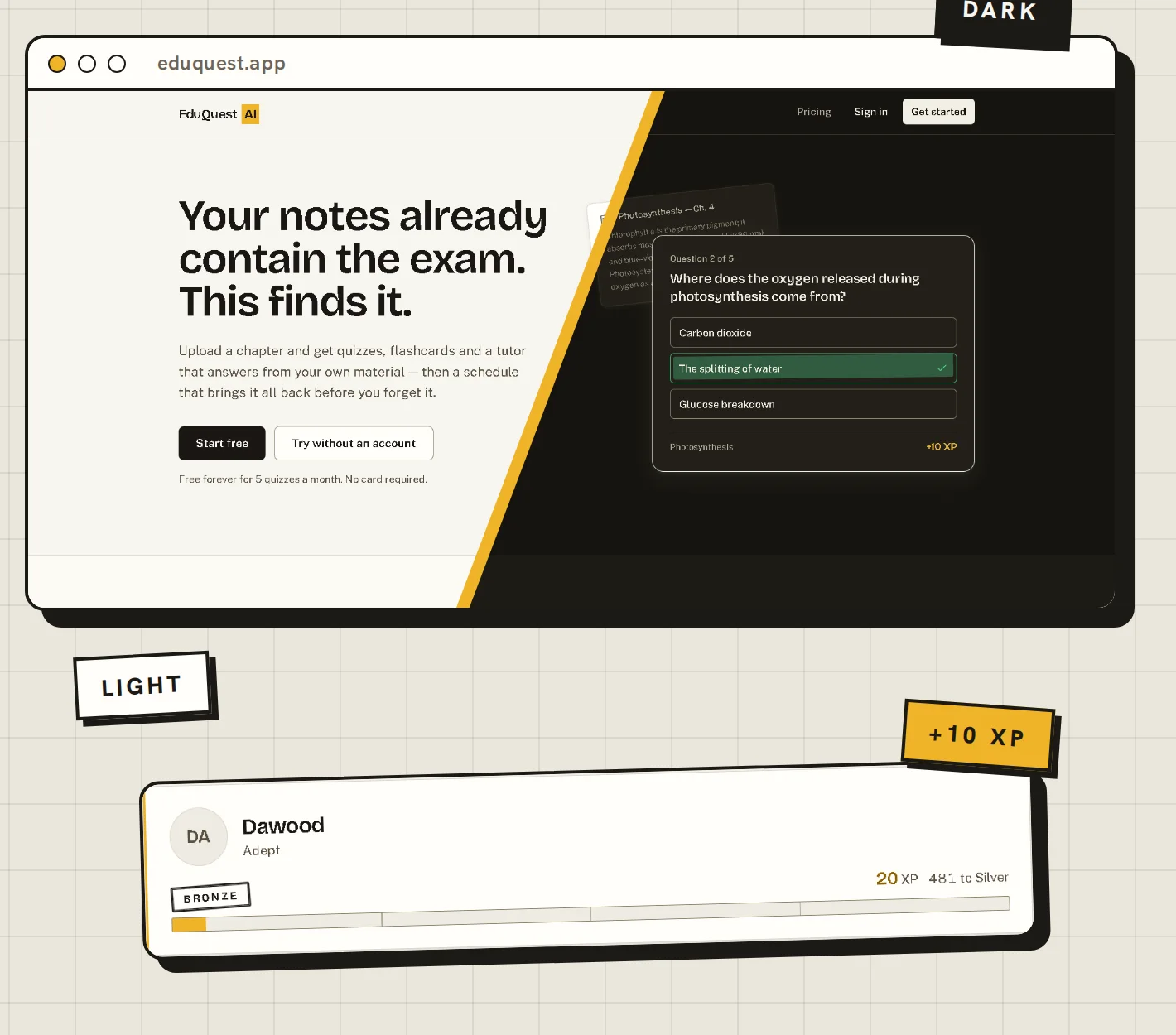
Paper and ink. Light and dark.
A "study hall" direction: warm stone, an engineering grid, and gold as the accent, since gold is also the XP currency.
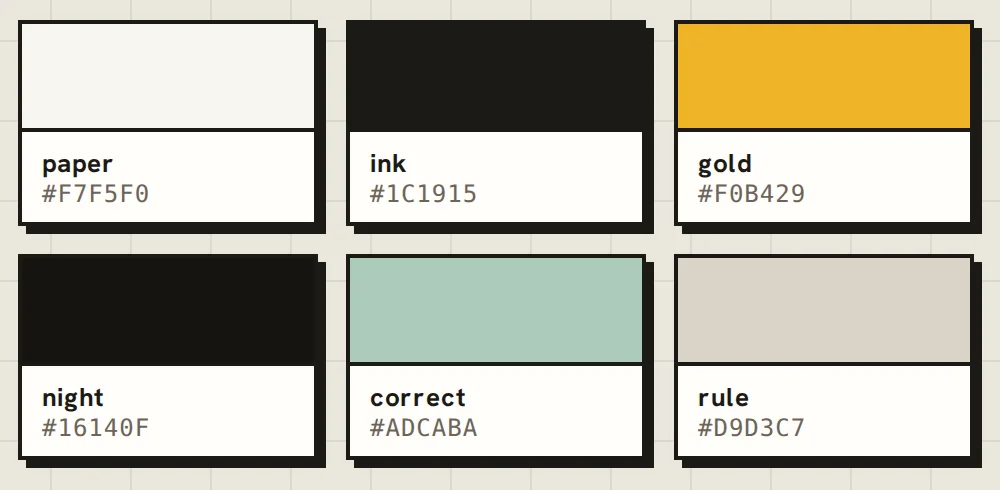
Six tokens, two themes.
Every text colour pair clears WCAG AA in both the light and dark themes.
Two apps, one repo.
A Next.js frontend and a FastAPI backend in one repository, built to actually ship.
Frontend
Next.js 14 App Router, TypeScript and Tailwind, with NextAuth sign-in through Google and GitHub.
Backend
FastAPI with httpOnly JWT auth and ownership checks on every quiz, flashcard, quest and study route.
Data
MongoDB Atlas through the async Motor driver, with indexes created on startup.
Language model
Groq generates the quizzes, flashcards, summaries and tutor answers.
Retrieval
Cohere embeddings, chunking and cosine search over each student's own files.
Game engine
XP, ranks and streaks, plus the SM-2 scheduler, quests and achievements.
What shipped
- Quizzes from PDF, DOCX, PPTX and TXT with adaptive difficulty
- A RAG tutor grounded in each student's own files
- SM-2 spaced-repetition flashcards
- XP, five ranks, daily and weekly quests, streaks and leaderboards
- Guest mode with no sign-up
- Google and GitHub sign-in
- Light and dark themes passing WCAG AA
- A landing page with a live quiz
- Playwright end-to-end tests on the core flow
Services
- MVP development
- AI features & integrations
- Landing pages & product design
- Fix AI-built apps
- Testing, DevOps & launch
Stack
- Next.js 14
- TypeScript
- Tailwind
- FastAPI
- MongoDB Atlas
- Groq
- Cohere
- Playwright
Building something like EduQuest AI?
Tell us what you need and we'll tell you honestly how we'd build it.
Book a free callNext project
Valit Mail
Private webmail client